The architecture was right
452 people starred this in 2025. It had three test functions. Both of those facts are the point: the decomposition was compelling enough to mark, and nothing in it was pinned to anything that could contradict it.
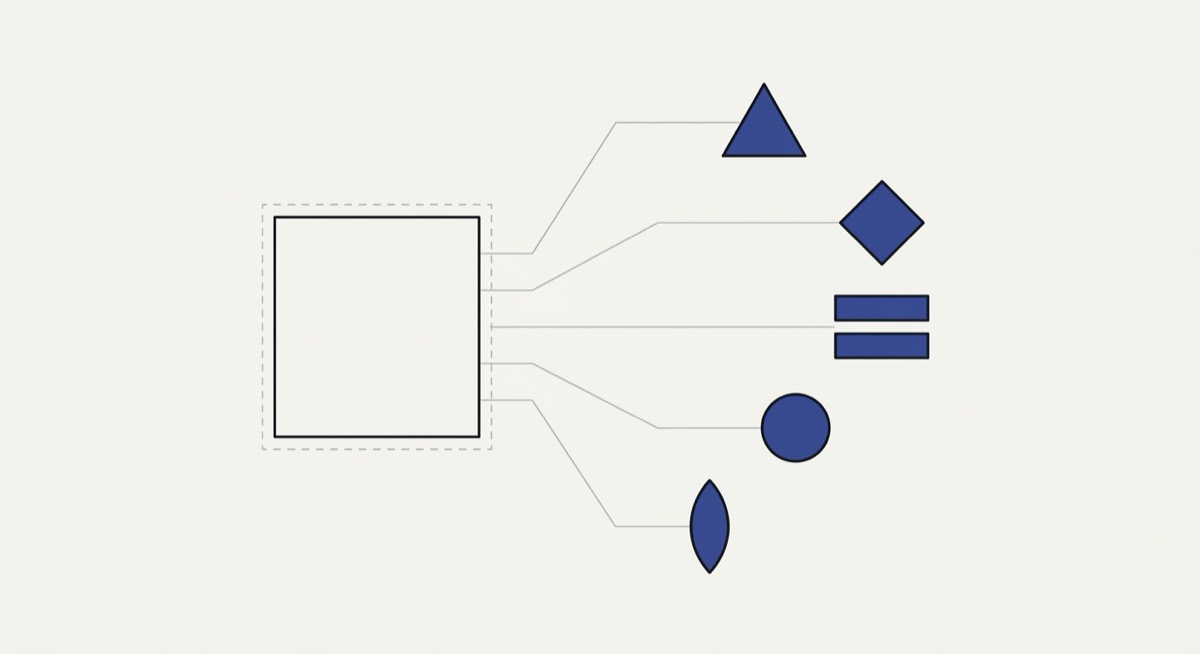
Eighteen thousand lines of Python across twelve subsystems: a library of versioned components, a bus for agent discovery, memory, an evolution loop, and a governance layer called Firmware. Backed by MongoDB Atlas.
It had three test functions.
That number is the whole story. This was not a product that failed; it was an architecture that was written down and never pinned to anything that could contradict it. The decomposition was right — right enough that every piece got independently re-derived over the following year, mostly without noticing.
The proof is in its own source
evolving_agents/firmware/firmware.py sets a governance string:
You are an AI agent operating under strict governance rules:
...
- Never use dangerous imports (os, subprocess, etc.)
That is governance by asking. In token-trie, the forbidden token is not discouraged — it has no path through the trie, so the model cannot emit it.
Same intention, twelve months and one substrate apart. The code is still on the default branch precisely so the two halves can be diffed.
What happens to it now
It is the umbrella, not a museum. Three milestones, two of them already resolved — one of those in a direction nobody wanted.
- Transfer and reframe — done. Moved into the organisation with its stars, forks and inbound links intact, and the README rewritten around what it got right and wrong. It had been pointing visitors at two successor repositories, one archived and one that returned 404.
- Recover the dual-embedding resolver — done, and it came back flat. Rebuilt without MongoDB and measured: identical to plain description-matching on a modern encoder, 80% both ways. The next run is the one that matters — a smaller encoder, where the gap it was designed to close may still exist.
- A portable definition with a conformance suite — not started. The five projects already share an instruction format character-for-character; what they do not share is enforcement. A conformance table would today read one of three, and that is the honest number to publish first.
What it cost
Two things did not survive, and only one of them on purpose.
The agent bus was dropped deliberately. A thousand lines of registry and runtime routing, welded to MongoDB, solving a problem MCP is now eating. Nothing replaces it: an agent that needs to discover another at runtime has no answer here today.
The dual-embedding resolver was lost by accident. Every component was indexed twice — once for what it is, once for what it is for — and tasks resolved against the second. It has since been recovered, and measured: on a small corpus with a modern embedding model it performs identically to plain description-matching. The idea may have been overtaken by the encoders. That is the current state, with a number attached rather than an assumption.